
20 July 2023, 11:30
Underwater camera network to monitor the habitat needs of juvenile fish
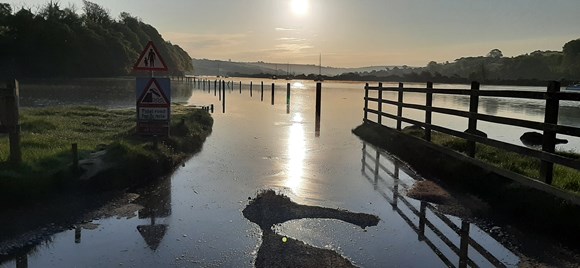
Scientists, managers and fishing organisations in the South West of England will work together to create a network of underwater cameras to monitor the habitats of fished species in the region’s coasts and estuaries.
The new project, funded by the UK Government, will fill important knowledge gaps about the essential habitats required by species including European sea bass and grey mullet.
To do that, it will use a recently developed Juvenile Habitat Monitoring Camera (JHaM-Cam) capable of filming the smallest juvenile life-stages of fish to measure the abundance and size of young fishes in the wild.
This smart underwater camera system will be deployed in the Plymouth Sound Marine National Park and surrounding areas using state-of-the-art scientific diving facilities at the University of Plymouth.
The project will also develop an interactive web portal through which recreational anglers can support the video analysis, and contribute critical information about fish living in different habitat types.
Anglers will also get the opportunity to access training in fish identification and monitoring techniques to enable them to participate in fish research in the future.
The two-year project, which has been awarded £530,000 in funding, is one of 12 initiatives – three of which are being led by the University of Plymouth - designed to support sustainable fisheries management that have received funding as part of the fourth and final round of the Fisheries Industry Science Partnership (FISP) scheme, part of the Government’s UK Seafood Fund.
Development of the JHaM-Cam, which has previously been supported by the Marine Management Organisation and Natural England, is being led by researchers at the University, building on the depth of its expertise in marine conservation and fish habitat research.
Dr Benjamin Ciotti, Lecturer in Marine Biology at the University and project lead, said: “Many species of fish which are popular for recreational anglers in the UK, spend their early life in heavily impacted inshore areas. However, we currently have very little detail about the specific habitats they need and if factors such as climate change and other human activities are placing them under threat. By developing new technology, we are striving to take a big step forward in delivering the evidence needed to support policy decisions and management actions that make fisheries more sustainable through broader consideration of the ecosystems on which exploited populations depend. We are also excited for the opportunity to build genuine partnerships: the project is a vehicle for the fishing industry, scientists and managers to work together to devise effective management, giving the industry a louder voice and greater stake in management and policy.”
The creation of the network of innovative camera instruments is being driven by Dr Oli Tills, who leads the University’s EmbryoPhenomics research group and is a Researcher in Residence at Plymouth Science Park.
The new project will capitalise on the Science Park’s excellence in digital additive manufacture, and the EmbryoPhenomics group’s experience in deep learning, computer vision and environmental sensing.
The project will also involve partners directly involved in recreational angling and fisheries management, including the Angling Trust, Bass Anglers Sportfishing Society, National Mullet Club, Association of Inshore Fisheries and Conservation Authorities, Southern Inshore Fisheries and Conservation Authority, and Institute of Fisheries Management.
Robin Bradley, Science Lead for the Bass Anglers Sportfishing Society, said: "Having assisted with trials to develop the process of viewing video footage of juvenile fish movements, we are delighted to be partnering the University of Plymouth on this important research project. This will not only enable members to help analyse fish movements from their own homes, but also to get involved in local fish sampling surveys. The information gained from these activities will lead to improved protection of existing, and the establishment of new, habitats which are essential for successful bass recruitment."
Contact Information
Alan Williams
alan.williams@plymouth.ac.uk
Notes to editors
About the University of Plymouth
The University of Plymouth is renowned worldwide for its high-quality research, teaching and innovation. With a mission to Advance Knowledge and Transform Lives, the University drives the global debate in disciplines from marine and maritime to medicine, law, computing and climate action.
With a city centre campus and further state-of-the-art facilities spread across Plymouth and beyond, plus Devon and Cornwall’s stunning coast and countryside on the doorstep, the University provides a unique blend of urban and outdoor lifestyle opportunities for everyone who studies and works here. A three-time winner of the Queen’s Anniversary Prize for Higher and Further Education – most recently in respect of its pioneering research on microplastics pollution in the ocean – Plymouth consistently ranks among the world’s leading universities for its innovation, research and teaching in relation to the United Nations’ Sustainable Development Goals.
Plymouth’s teaching and learning excellence is reflected in one of the highest numbers of National Teaching Fellows of any UK university. With over 18,000 undergraduate and postgraduate students, plus a further 7,000 studying at partner institutions in the UK and around the world, and over 140,000 alumni pursuing their chosen careers internationally, the University of Plymouth has a growing global presence.


Powered by Onclusive PR Manager © 2026